
The Kenya Cashew Nut Initiative (KCNI) is a project within the Agriculture theme. Promoted by Agri Advance, which describes itself as a division of GDI Africa, it proposes to raise the incomes of the coast’s cashew farmers by collecting their nuts through village centres, recording sales digitally with M-PESA payments, certifying the crop as “Kenya Cashew”, and linking farmers to processors under off-take agreements. It seeks US$215,000 for a 12-month pilot in Kilifi County with 1,200 farmers in 48 groups and 12 village collection centres, which the infobox converts to about KES 27.8 million at KES 129.50 to the dollar.12 As of October 2026 it is an unfunded proposal known from its two-page brief, and it sits beside a national effort to revive the cashew sector announced in January 2026.
What it is
The brief describes a “hub and spoke aggregation model”. Village Collection Centres in areas with many cashew trees would collect, grade and store nuts to a standard and feed them into larger Processor Collection Centres. A digital traceability tool would register farmers and record transactions, integrated with M-PESA, aiming at 80 per cent end-to-end traceability. A “Kenya Cashew” certification standard would be enforced through batch tracking and quality control. Off-take agreements would connect farmers to processors, “led by Nuts & More”, with supply aggregated for export to the European Union and the Middle East.
The pilot in Kilifi County would cover 1,200 farmers organised in 48 groups and 12 Village Collection Centres over 12 months, and the brief presents it as a model to be repeated across six coastal counties and in other Kenyan value chains. It projects 1,920 to 3,840 jobs within two years of implementation, a farm-gate price rise “via traceability” from KSh 50 to more than KSh 60 per kg, or about 20 per cent more income per kilo, and a shift by farmers from barter for cooking oil and flour to cash, building M-PESA records and opening bank and SACCO accounts. It adds that the collection centres would remain as permanent assets that could aggregate other crops. The cost of the pilot works out at about US$179 per farmer, this page’s arithmetic.
The legal framework already provides for much of this model. The Crops (Nuts and Oil Crops) Regulations, 2020 let the Agriculture and Food Authority (AFA) run a traceability system for nuts, provide that commercial buying from smallholders may be done at collection centres “for purposes of traceability”, and allow those centres to be owned or managed by county governments, growers’ associations, dealers or processors.3
Rationale
The brief’s case is that cashew could transform farmers’ incomes on the coast but that they “earn a fraction of the crop’s value”. It says some 70,000 smallholders grow the crop, 59 per cent of them women, with about 2 million trees, that they are held back by ageing trees, barter and “exploitative middlemen”, and that Kilifi County has untapped land in the agro-ecological zone suited to cashew. It sets Africa’s share of world raw cashew production, 61 per cent, against its share of processing, 12 per cent, and says Kenya produces under 10,000 tonnes a year against a processing capacity of 38,000 tonnes. It adds that global prices for raw nuts rose 60 per cent in 2025 to US$1,600 to 1,700 a tonne while farm-gate prices lag at about US$0.50 per kg.
The brief’s figures and other published figures
Several of the brief’s figures differ from official statistics or other sources. The differences mostly turn on the year or the measure used, and the table sets them side by side.
| Measure | The brief | Other published figures | Note |
|---|---|---|---|
| Kenya’s annual production | Under 10,000 tonnes, “average” | 7,803 tonnes in 2024, down from 12,668 tonnes in 2020 (AFA);4 “about 13,000 tonnes” (Agriculture Cabinet Secretary, January 2026)5 | The brief’s figure lies between the two official ones. |
| Processing capacity | 38,000 tonnes | 45,000 tonnes of installed capacity (Agriculture Cabinet Secretary, January 2026) | No official source for 38,000 tonnes was found; Business Daily gives 38,000 tonnes as Kenya’s production in 1977.6 |
| Farm-gate price | About KSh 50 per kg, rising to KSh 60 or more with the project | KES 60 to 65 per kg as county averages in 2024, with brokers often paying individual farmers less (AFA) | The brief’s base price may reflect what brokers pay; AFA’s reported 2024 averages are already at the level of its target. |
| Number of farmers | About 70,000 | “Almost 70,000 smallholders” (Farm Africa)7 | Consistent. No source was found for the 59 per cent share of women. |
| Africa’s raw cashew output | 61 per cent of world output, about 1.7 million tonnes | World output of 5.29 million tonnes in 2024/25, with West Africa at 2.71 million and Eastern Africa at 0.54 million (CBI, citing INC)8 | The share matches; on CBI’s figures Africa’s tonnage is about 3.25 million tonnes, this page’s arithmetic. |
| Raw nut prices | Up 60 per cent in 2025 to US$1,600 to 1,700 a tonne | India’s average import price was US$1,349 a tonne in 2024 and US$1,531 in January to October 2025; its quarterly price rose from US$1,104 in mid-2024 to US$1,745 at the end of 2024 before easing (APEDA)9 | The brief’s range matches the spike from late 2024 to early 2025 rather than the average for 2025. |
Status and timeline
The brief, issued in 2026, says the immediate focus is the Kilifi pilot and asks for anchor funders. No funder, agreement or start date has been announced, and no public record of the initiative beyond the brief was found as of October 2026. GDI Africa’s list of its initiatives does not mention Agri Advance or cashew.10
The initiative arrives during a renewed government push on the crop. On 8 January 2026 Agriculture Cabinet Secretary Mutahi Kagwe visited farmers and processors in Kilifi, said Kenya produced about 13,000 tonnes against an installed processing capacity of 45,000 tonnes, and cited the AFA’s estimate that a fully revived industry could create up to 350,000 jobs and add more than KSh 30 billion to GDP. In March 2024 national officials and Kilifi leaders, including Governor Gideon Mung’aro, agreed to repossess the former state cashew factory in Kilifi from Millennium Management Limited as part of a revival plan; no report that the repossession was completed was found.11 Kilifi’s development plan for 2023 to 2027 budgets KSh 42 million over five years to plant cashew and coconut trees, from 800 acres in the first year to 4,100 acres a year from the third.12 Nothing links KCNI to these programmes.
How the project is being procured
No Terms of Reference or tender exists; the pilot is a privately run programme seeking grant or impact funding from “anchor funders”. Its collection centres and traceability system would operate under the Crops (Nuts and Oil Crops) Regulations, which require dealers and processors to be licensed by the AFA. An order of 2009 prohibits the export of raw cashew nuts, and the licences issued under the current regulations do not authorise it, so the brief’s export markets would be served through Kenyan processors.1314
Who is involved
GDI Africa is the African arm of the Global Development Incubator, which also incubated the Economic Development and Investment Council for Greater Mombasa. The brief names Kinyua M’Mbijjewe as its contact; GDI’s profile describes him as Director, Food Systems Innovation and Agriculture Value Chains, at GDI Africa.15 The proposed lead off-taker, Nuts and More, runs a cashew factory in Kilifi; in 2024 it told the Kenya News Agency that it could process more than 6,000 tonnes a shift but had secured only 3,000 tonnes locally and was importing nuts from Tanzania.16 The AFA’s Nuts and Oil Crops Directorate regulates the sector, and the Kenya Agricultural and Livestock Research Organization’s centre at Mtwapa breeds new cashew varieties.
Concerns and counterpoints
No one has commented in public on the initiative itself. The points below come from the record of Kenya’s cashew sector and of comparable efforts, as general context.
Supply, not processing, is short
Kenya’s processors already report too few nuts: Nuts and More imports from Tanzania to keep its Kilifi factory running, and Kenya imported 945 tonnes of in-shell cashew in 2024.17 The AFA reports that the area under cashew is shrinking, with Kilifi and Kwale accounting for more than 90 per cent of the 2024 decline, because farmers fell trees for firewood, and that low farm-gate prices have led many to abandon their farms. Better aggregation and prices may help, but the brief does not include replanting or replacing ageing trees, and Kilifi’s own plan sets planting targets of a few thousand acres a year.
A history of failed revivals
Githua Kihara, writing in The Elephant, traces the sector’s decline from the state-backed Kenya Cashewnuts factory of 1975, through its collapse in 1997, receivership and sale to Millennium Management in 2002, to the loss of cooperative marketing and the rise of brokers; he also argues that the 2009 export ban was imposed hastily.18 Farm Africa and Ten Senses Africa ran a cashew and sesame project with 15,000 smallholders in Kilifi, Lamu and Kwale from 2018 to 2020. Lamu growers have asked for the export ban to be lifted, their chairman Mohamed Athmani saying that the number of active farmers had fallen from more than 10,000 to about 3,000.19 A new initiative would need to show what it does differently.
Price and market risk
Raw cashew prices are volatile: the late-2024 spike eased through 2025. The brief notes no price floor or risk-sharing arrangement for farmers, and its price uplift depends on processors paying a premium for traceable nuts.
Sources
- Kenya Cashew Nut Initiative, Agri Advance, a division of GDI Africa, 2026.
- The Crops (Nuts and Oil Crops) Regulations, 2020, Kenya Law.
- Kilifi County Integrated Development Plan 2023-2027, County Government of Kilifi.
- Yearbook of Statistics 2025, Agriculture and Food Authority (11 MB, linked rather than uploaded).
- The European market potential for cashew nuts, CBI, 2026.
- The Agriculture (Prohibition of Exportation of Raw Nuts) Order, 2009, via FAOLEX.
Footnotes
-
Kenya Cashew Nut Initiative, Agri Advance, a division of GDI Africa, 2026, page 1. ↩
-
Kenya Cashew Nut Initiative, page 2. ↩
-
The Crops (Nuts and Oil Crops) Regulations, 2020 (Legal Notice 164 of 2020), Kenya Law, revised to 14 February 2025, printed page 8 (regulations 24 to 28). ↩
-
Yearbook of Statistics 2025, Agriculture and Food Authority, 2025, printed pages 48 to 50 (Tables 29 to 31, from the Nuts and Oil Crops Directorate). The original was unreachable on 22 October 2026; an archived copy was read. ↩
-
CS Kagwe targets cashew revival to create over 350k jobs, Sharon Mwende, The Star, 8 January 2026. ↩
-
Why farmers fell cashew nut trees for charcoal, Gerald Andae, Business Daily, 26 August 2020. ↩
-
Cashew nut and sesame production and marketing, Farm Africa, project factsheet for 2018 to 2020. ↩
-
The European market potential for cashew nuts, CBI (Centre for the Promotion of Imports from developing countries), updated 23 March 2026. ↩
-
Monthly dashboard: Cashew, November 2025, Agricultural and Processed Food Products Export Development Authority, Government of India, with Crisil data, December 2025, PDF pages 9 and 11. ↩
-
Our Initiatives, GDI Africa, read 22 October 2026. ↩
-
State to repossess Kilifi nut factory in bid to revive sector, The Star, 22 March 2024. ↩
-
Kilifi County Integrated Development Plan 2023-2027, County Government of Kilifi, May 2023, printed page 135. ↩
-
The Crops (Nuts and Oil Crops) Regulations, 2020, printed pages 30 and 35 (licence conditions). ↩
-
The Agriculture (Prohibition of Exportation of Raw Nuts) Order, 2009 (Legal Notice 109 of 2009), Kenya Subsidiary Legislation 2009, page 384, via FAOLEX. ↩
-
Kinyua M’Mbijjewe, Global Development Incubator, read 22 October 2026. ↩
-
Raw material shortage threatens Cashew-nut factory in Kilifi, Cynthia Maseno, Kenya News Agency, 10 August 2024. ↩
-
Yearbook of Statistics 2025, Agriculture and Food Authority, 2025, printed page 67 (Table 45). ↩
-
What Ails the Cashew Nut Sector in Kenya?, Githua Kihara, The Elephant, 7 August 2020. ↩
-
Lamu cashew farmers call for an end to 14-year export ban, The Star, 21 January 2022. ↩
Related pages
Holding
Cashew tree in Meconta, Mozambique
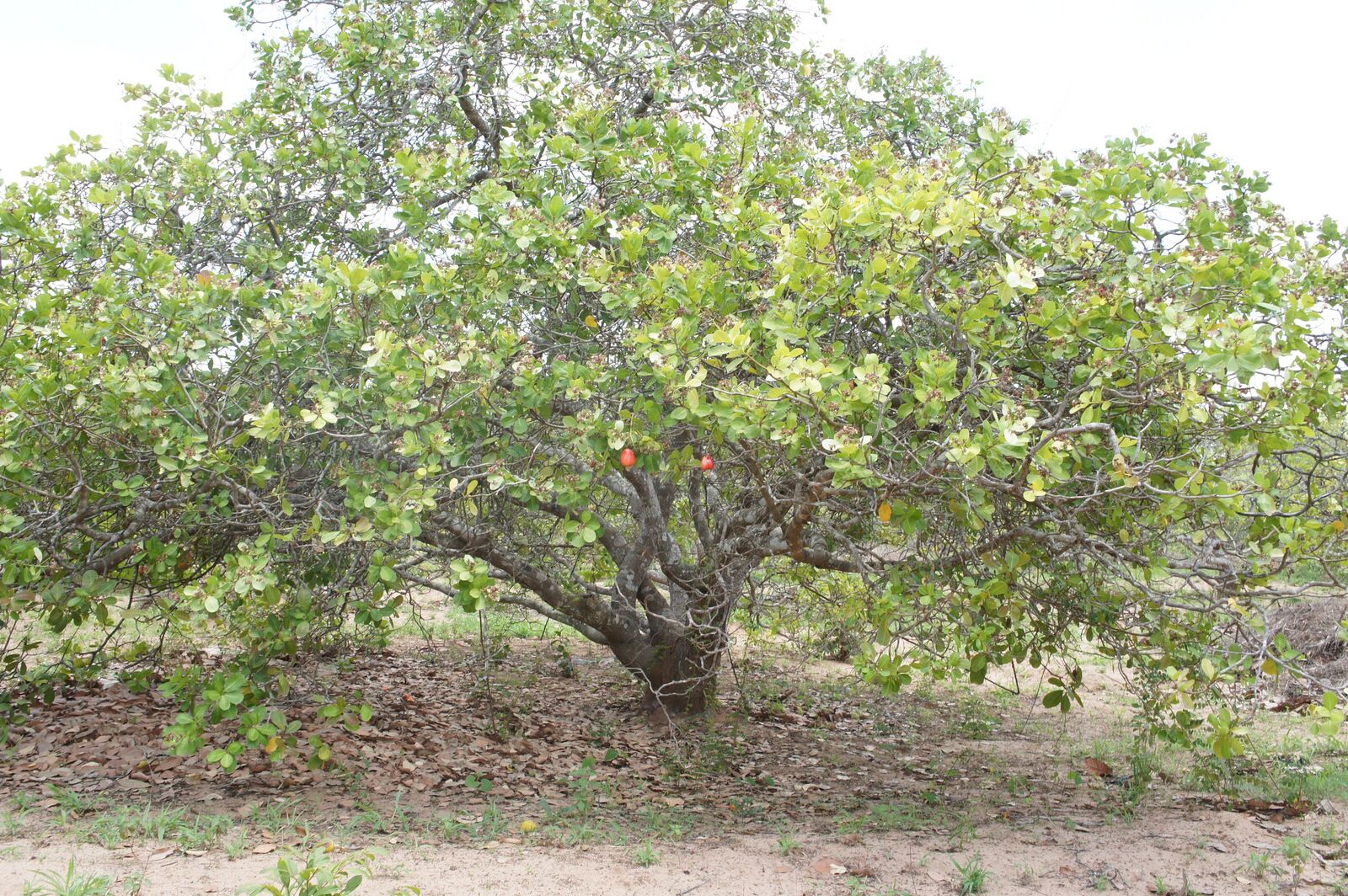
A cashew tree in Meconta District, Nampula Province, Mozambique, 25 November 2016.
Holding
Crops (Nuts and Oil Crops) Regulations 2020
The Crops (Nuts and Oil Crops) Regulations, 2020, Legal Notice 164 of 2020, as revised by Kenya Law to 14 February 2025 (https://new.kenyalaw.org/akn/ke/act/ln/2020/164/eng@2025-02-14/source.pdf).
Holding
Kenya Cashew Nut Initiative two page brief 2026
Kenya Cashew Nut Initiative (KCNI), a two-page brief by Agri Advance, a division of GDI Africa, 2026.
Holding
Kilifi County Integrated Development Plan 2023 2027
Kilifi County Integrated Development Plan 2023-2027, Accelerating Socioeconomic Transformation for Inclusive Growth, County Government of Kilifi, May 2023 (copy hosted by the Council of Governors' Maarifa Centre).
Reference
The Crops (Nuts and Oil Crops) Regulations, 2020 (Legal Notice 164 of 2020), Kenya Law, revised to 14 February 2025, pri
The Crops (Nuts and Oil Crops) Regulations, 2020 (Legal Notice 164 of 2020), Kenya Law, revised to 14 February 2025, printed page 8 (regulations 24 to 28).
Reference
CS Kagwe targets cashew revival to create over 350k jobs, Sharon Mwende, The Star, 8 January 2026.
CS Kagwe targets cashew revival to create over 350k jobs, Sharon Mwende, The Star, 8 January 2026.
Reference
Yearbook of Statistics 2025, Agriculture and Food Authority, 2025, printed page 67 (Table 45).
Yearbook of Statistics 2025, Agriculture and Food Authority, 2025, printed page 67 (Table 45).
Reference
Raw material shortage threatens Cashew-nut factory in Kilifi, Cynthia Maseno, Kenya News Agency, 10 August 2024.
Raw material shortage threatens Cashew-nut factory in Kilifi, Cynthia Maseno, Kenya News Agency, 10 August 2024.
Reference
Cashew nut and sesame production and marketing, Farm Africa, project factsheet for 2018 to 2020.
Cashew nut and sesame production and marketing, Farm Africa, project factsheet for 2018 to 2020.
Reference
Kinyua M'Mbijjewe, Global Development Incubator, read 22 October 2026.
Kinyua M'Mbijjewe, Global Development Incubator, read 22 October 2026.
Reference
Yearbook of Statistics 2025, Agriculture and Food Authority, 2025, printed pages 48 to 50 (Tables 29 to 31, from the Nut
Yearbook of Statistics 2025, Agriculture and Food Authority, 2025, printed pages 48 to 50 (Tables 29 to 31, from the Nuts and Oil Crops Directorate). The original was unreachable on 22 October 2026; a
Reference
Why farmers fell cashew nut trees for charcoal, Gerald Andae, Business Daily, 26 August 2020.
Why farmers fell cashew nut trees for charcoal, Gerald Andae, Business Daily, 26 August 2020.
Reference
Kilifi County Integrated Development Plan 2023-2027, County Government of Kilifi, May 2023, printed page 135.
Kilifi County Integrated Development Plan 2023-2027, County Government of Kilifi, May 2023, printed page 135.
Reference
Monthly dashboard: Cashew, November 2025, Agricultural and Processed Food Products Export Development Authority, Governm
Monthly dashboard: Cashew, November 2025, Agricultural and Processed Food Products Export Development Authority, Government of India, with Crisil data, December 2025, PDF pages 9 and 11.
Reference
Our Initiatives, GDI Africa, read 22 October 2026.
Our Initiatives, GDI Africa, read 22 October 2026.
Reference
State to repossess Kilifi nut factory in bid to revive sector, The Star, 22 March 2024.
State to repossess Kilifi nut factory in bid to revive sector, The Star, 22 March 2024.
Reference
The European market potential for cashew nuts, CBI (Centre for the Promotion of Imports from developing countries), upda
The European market potential for cashew nuts, CBI (Centre for the Promotion of Imports from developing countries), updated 23 March 2026.
Reference
Lamu cashew farmers call for an end to 14-year export ban, The Star, 21 January 2022.
Lamu cashew farmers call for an end to 14-year export ban, The Star, 21 January 2022.
Reference
The Crops (Nuts and Oil Crops) Regulations, 2020, printed pages 30 and 35 (licence conditions).
The Crops (Nuts and Oil Crops) Regulations, 2020, printed pages 30 and 35 (licence conditions).
Reference
The Agriculture (Prohibition of Exportation of Raw Nuts) Order, 2009 (Legal Notice 109 of 2009), Kenya Subsidiary Legisl
The Agriculture (Prohibition of Exportation of Raw Nuts) Order, 2009 (Legal Notice 109 of 2009), Kenya Subsidiary Legislation 2009, page 384, via FAOLEX.
Reference
Kenya Cashew Nut Initiative, Agri Advance, a division of GDI Africa, 2026, page 1.
Kenya Cashew Nut Initiative, Agri Advance, a division of GDI Africa, 2026, page 1.
Reference
What Ails the Cashew Nut Sector in Kenya?, Githua Kihara, The Elephant, 7 August 2020.
What Ails the Cashew Nut Sector in Kenya?, Githua Kihara, The Elephant, 7 August 2020.
Reference
Kenya Cashew Nut Initiative, page 2.
Kenya Cashew Nut Initiative, page 2.